Bath textiles · Fabric care
Coyuchi Bath Textiles: Understanding Pile, Weight, and Drying Time
A towel’s character is written into its loops: how high they rise, how closely they gather, and how much cotton surrounds them. Learn how pile and fabric weight shape softness, absorbency, and drying, then match those qualities to the rhythms and realities of your bathroom.
A towel can make an ordinary morning feel quietly considered. It can also be the damp object still hanging on the back of the door hours later. The difference is not simply a question of taste or price. Construction, fiber, room conditions, and everyday care all have a part to play. Two towels may both be made of cotton yet feel entirely different in the hand, absorb water at different rates, and take noticeably different amounts of time to dry.
For Coyuchi bath textiles, as for towels generally, useful questions begin with the fabric itself. How plush is the pile? How much material is concentrated in each square metre? Where will the towel hang after use, and can air move around it? These details connect the pleasure of softness with the practical business of laundering and drying. Knowing how they interact helps you choose bath pieces that feel good not only at the first touch, but throughout a full week of use.
This is not a contest in which the thickest towel automatically wins. A lofty towel may feel enveloping and absorb generously, while a lighter weave may release moisture sooner and prove easier to dry in a compact or humid room. The right choice is the one that suits your routine: the bathroom you have, the number of towels in circulation, and the way you like to finish a bath or shower.
What pile means in a bath towel
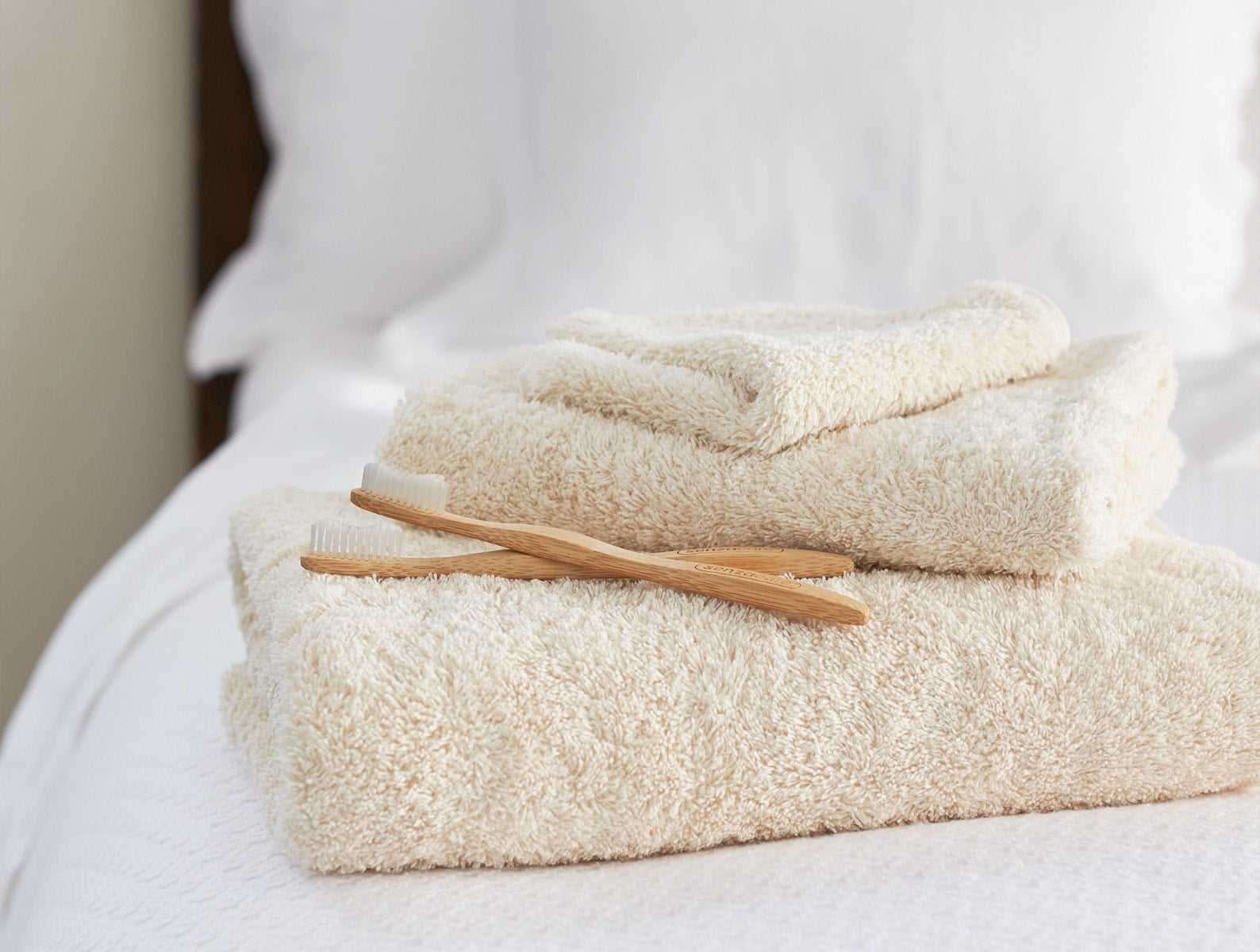
In a conventional terry towel, pile refers to the raised loops that stand above the fabric’s foundation. Those loops create the familiar soft, textured surface. They also provide a large area of cotton that can make contact with water and skin. When you press a towel against damp skin, the looped structure helps draw moisture away from the surface and hold it within the fabric.
Pile is not one single specification. Loop height, density, fiber quality, and the way the yarn is made all influence how a towel behaves. Longer loops can contribute to a fuller, more cushioned hand, but loop height alone cannot tell you whether a towel will be durable, absorbent, or easy to care for. A well-designed towel balances its surface texture with a stable ground weave and sound finishing. If loops are excessively snagged or pulled, for instance, the towel may lose some of its polished appearance even if the fabric remains usable.
Long loops can also make a towel feel more substantial because more yarn is exposed at the surface. That extra texture may be appealing after a shower, particularly for someone who enjoys a soft, wrapping sensation. But a high, thick pile can hold more moisture after use. Whether it dries promptly depends on more than the loop: room temperature, humidity, airflow, spacing on a rail, and the towel’s overall weight matter, too.
Some towels use low-loop or flat-woven constructions rather than deep terry. These often feel less cushiony, but their more open or compact surface may make them easier to handle and quicker to air dry. A flat-woven linen towel, for example, offers a different experience from a plush cotton bath towel: lighter and more drapey, with a smooth, textured character rather than a deep, velvety pile. Neither construction is inherently superior. They answer different preferences and different domestic conditions.
Reading fabric weight without making it the whole story
Fabric weight is commonly stated in grams per square metre, abbreviated GSM. In broad terms, a higher GSM indicates more mass in a given area; for towels, that often corresponds to a thicker or denser feel. It can be a useful point of comparison when specifications are available, but it is not a complete measure of quality. Fiber, yarn, loop construction, finishing, and dimensions all influence the result a person actually feels.
Think of GSM as a clue, not a verdict. A heavier towel may feel plush and substantial, and it can hold a generous amount of water. It may also require more time and energy to dry, particularly if it is bunched over a narrow rail or used in a room with little ventilation. A lighter towel is often easier to spread, pack, and launder in larger loads. It may suit a guest bath, a small apartment, or anyone who prefers a quick-drying rotation over a cocooning feel.
Weight is most useful when considered alongside use. A generously sized bath sheet will naturally contain more fabric than a hand towel, so comparing their total heft tells you little about the cloth itself. Look for weight specifications on a consistent basis and compare like with like: similar towel types, sizes, and constructions. If a product description does not publish a GSM figure, avoid guessing from photographs or from adjectives such as “plush” and “lightweight.” Those words convey an intended feel, not a precise measurement.
For example, Coyuchi’s Cloud Loom Organic Towels are described as being made from long-staple Turkish organic cotton, with long loops designed to create a plush, thick feel and strong absorbency. That description offers meaningful information about the intended texture and construction, but it does not provide a GSM figure or a specific pile height. Those measurements should not be inferred. What can be said is that a long-loop, full-textured towel is likely to feel different from a lightweight, flat-woven option, and its care routine should allow it enough room to dry thoroughly.
Softness, absorbency, and the first touch
Softness is intensely personal. Some people want a cloudlike surface; others prefer a towel with a little more body and friction. A plush pile can create that cushioned first impression, while a tighter or flatter weave may feel crisp and direct. The sensation also changes with laundering. Residual detergent or fabric softener can coat fibers and reduce a towel’s ability to absorb water, even if the surface temporarily feels slick or unusually smooth.
Absorbency, too, is not determined by one feature. Cotton fibers can take up moisture, while the looped structure gives water places to move into the fabric. A towel’s ability to absorb effectively depends on its fiber, yarn, construction, and condition. New towels may also have finishes from manufacturing that affect how readily they take up water at first. With regular washing, the hand and performance may settle into a more familiar state.
It is worth distinguishing absorption from drying speed. A towel can absorb well during use and still take a long time to dry afterward. The water it has collected must evaporate from the fabric and escape into the surrounding air. A thick, saturated towel has more moisture to release, and its inner layers may remain damp when the exterior feels dry. Good air circulation helps that moisture disperse; a cramped hook or folded-over rail can slow the process.
Softness is also not a reason to use more detergent or fabric conditioner. Follow the care label and use detergent sparingly enough to rinse clean. Fabric softener can leave a coating that interferes with absorbency, so many towel care routines are better without it. If a towel begins to feel stiff, consider whether detergent buildup, hard water, overloading the washer, or overdrying may be contributing before changing products or using an aggressive treatment.
Why drying time changes from bathroom to bathroom
Drying time is a meeting between textile and environment. A thick towel on a crowded rail in a steamy bathroom has different prospects from the same towel spread over a wide bar in a warm, ventilated room. The bathroom’s humidity may stay elevated after showers, limiting how readily moisture evaporates. A closed door, poor ventilation, and towels layered on top of one another can prolong dampness.
Airflow is especially important because it carries moisture away from the towel’s surface. Whenever possible, hang towels fully open rather than folded into several layers. Give each towel enough space that air can move around both sides. If you use hooks, spread the fabric rather than leaving it gathered into a thick bundle. A heated towel rail may help in some homes, but follow its instructions and avoid covering heating equipment in a way that restricts safe operation.
Room temperature matters, but warmth alone is not a substitute for ventilation. A warm, humid room can still leave textiles slow to dry if moisture has nowhere to go. Use an extractor fan when available and allow it to run for the recommended time after bathing. Opening a window can help when weather and privacy allow. These small habits can improve the drying environment without requiring a change in towels.
How a towel is used is another variable. A hand towel used briefly may need less recovery time than a bath towel that has absorbed moisture from a full shower. A bath sheet, because it covers more area and contains more material, may retain more water overall. Multiple people sharing one bathroom can make spacing and rotation especially important. If towels are still damp when the next person needs one, adding a second set to the rotation may be more practical than expecting one heavy towel to dry instantly.
A towel should be allowed to dry between uses. Persistently damp fabric can develop an unpleasant stale smell, a sign that the routine or environment may need attention. First improve spreading and airflow. If an odour remains, wash the towel according to its care instructions and make sure it dries completely before folding it away. Avoid storing damp towels in a hamper or cupboard, where restricted air can keep moisture trapped.
Choosing a towel for your real routine
The most satisfying towel is not always the most indulgent one on a shelf. It is the one that fits your habits. Before choosing, consider where the towel will be used, who will use it, how often laundry is done, and how well the room ventilates. A towel for a spacious, airy primary bathroom can be selected differently from one intended for a small, busy family bathroom.
- For a plush finish: Look for a towel described in terms of full pile, long loops, or a thick hand. Expect to give it room to hang open after use.
- For a compact bathroom: Consider a lighter towel or a flatter construction that is easier to spread and may be simpler to dry on a limited rail.
- For frequent use: Build a rotation so each towel has enough time to dry fully before it is used again.
- For travel or a gym bag: Prioritize manageable bulk and ease of drying over the deepest pile.
- For a coordinated bath: Combine different towel sizes and textures according to their jobs, rather than assuming every piece needs the same weight.
Consider the details that affect daily handling as well. A generously sized bath sheet offers more coverage, but takes up more room in the washer and on the drying rail. A hand towel should be easy to reach and replace. A guest towel may be selected for its appearance as well as utility, but it still needs to be washable and practical for its setting. In a household with limited laundry capacity, a highly absorbent, heavy towel may mean fewer pieces fit comfortably in each load.
For towels with organic or other fiber claims, read the product information carefully and distinguish certification details from general material descriptions. Coyuchi’s Cloud Loom Organic Towels are identified as GOTS certified and made from 100% organic cotton, according to the product information. That helps explain the stated material and certification, but does not remove the need to follow the towel’s care directions: this range specifies a cold wash on a gentle cycle with like colors and low tumble drying, with prompt removal from the dryer.
Laundering habits that preserve pile and performance
Care begins with the label. Temperatures, cycle settings, and drying advice can vary by product, so a generic routine should never override the maker’s instructions. For Cloud Loom Organic Towels, the stated guidance is to wash cold on a gentle cycle with like colors, tumble dry on low, and remove promptly. Following specific instructions is a simple way to protect the fabric and keep the laundering routine consistent with the construction.
Do not overload the washing machine. Towels need enough room to move through the wash and rinse, and a packed drum can make it harder for water and detergent to circulate. Wash similar colors together to reduce the chance of color transfer. Use an appropriate amount of detergent rather than assuming more will make the fabric cleaner. Excess detergent may be difficult to rinse away and can build up in the pile, changing its feel and reducing absorbency.
Fabric softener is often unnecessary for towels and may leave a coating on fibers. If a towel feels less absorbent over time, review detergent use and rinsing before reaching for softener to address the texture. Do not use bleach unless the care instructions expressly allow it. Harsh products can affect color and fiber strength. Likewise, high heat and prolonged tumble drying may stress fibers; use the settings specified for the towel and avoid leaving it in the dryer once it is dry.
After laundering, separate towels promptly and hang them so air can reach the fabric. If line drying, avoid tightly folding a damp towel over a narrow line. If machine drying, clean the lint filter as recommended for the appliance and follow its safety guidance. A towel that comes out warm should still be checked for dampness in thicker areas before it is folded and stored.
A simple way to compare pile and weight
When you are comparing bath textiles, use a short checklist rather than relying on a single adjective. First, identify the fiber content. Then look for the construction: terry loops, long loops, or a flat weave. Note any published fabric weight, but compare it only with similar products. Finally, check the care directions and think honestly about where the towel will dry.
If product details are limited, ask practical questions rather than filling in the blanks. Is the towel described as thick or lightweight? Is there a stated GSM? What wash temperature is recommended? Can it be tumble dried, and at what setting? Is the item intended as a bath towel, a hand towel, or a multipurpose wrap? Clear answers allow you to assess suitability without treating marketing language as technical data.
Try to picture the towel after use, not just folded neatly in a stack. Will it fit comfortably on your rail? Can it hang open without touching another damp towel? Does your household have time to launder and rotate it? These unglamorous questions are often the ones that determine whether a textile becomes a pleasure or a small daily frustration.
The considered answer: comfort balanced with care
Pile and weight shape the tactile personality of bath textiles. Higher, fuller loops can create a plush surface and a sense of generous comfort. More material can also mean more water held after a shower and a longer path to complete drying. A lighter or flatter towel may feel less enveloping, yet suit a space where ventilation, storage, or laundry capacity is limited.
Neither choice is a universal ideal. A towel’s performance emerges from the combination of fiber, weave, size, laundering, and the atmosphere of the room. Choose for the way you live: the sensory qualities you enjoy, the amount of space you have, and the pace of your household. Then give the textile the basic care it needs—room in the wash, a thorough rinse, and enough air between uses.
That is the understated elegance of a well-chosen bath towel: not merely softness for a moment, but a considered balance of comfort and usefulness. When pile, weight, and drying conditions work together, the daily ritual feels easier, the towel is ready when you need it, and a small domestic detail earns its place in the rhythm of the home.