Textile Care & Construction
How Honeycomb Weaves Shape the Feel of St Geneve Throws
A throw’s weave is more than a surface detail. It influences how the fabric catches the light, rests against the skin, moves across a sofa, and holds warmth. In St Geneve’s Avalon Linen Throw, a honeycomb construction gives pure linen an airy texture and an easy, distinctive drape.
Published November 8, 2026
A beautifully made throw tends to make itself useful before it makes itself noticed. It is within reach on a cool evening, draped over the arm of a chair, folded at the foot of a bed, or gathered around the shoulders during an unhurried hour at home. Yet the qualities that make one throw feel inviting and another feel merely decorative are often decided long before it reaches the room. Fiber matters, of course, but so does the structure of the cloth: the way its threads cross, lift, and settle into a surface.
That structure is the weave. In the St Geneve Avalon Linen Throw, a honeycomb weave gives linen a gently sculptural character. The result is a lightweight textile with an open, tactile surface and a soft, relaxed drape. Understanding what that construction does can help explain why the throw feels different from a flat-woven blanket, how it behaves in everyday use, and why thoughtful care is especially worthwhile for textured linens.
The structure behind the texture
Weaving creates fabric by interlacing two sets of yarns. The lengthwise threads, called the warp, are held under tension on a loom; the crosswise threads, called the weft, pass over and under them in a planned sequence. A plain weave follows a simple, regular pattern. More complex structures alter that sequence, creating raised areas, recessed areas, ribs, or other surface effects.
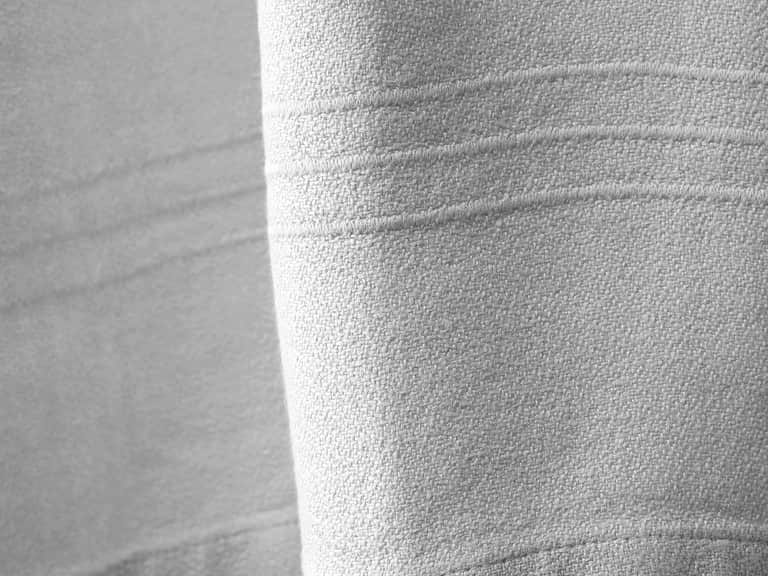
A honeycomb weave is named for the small cell-like pattern that appears across its surface. The woven structure forms a series of raised ridges and recessed pockets, giving the cloth dimension rather than a uniformly smooth face. The pattern is an effect of construction, not an applied coating or an extra layer attached to the fabric. In the Avalon throw, that structure is worked in 100% linen, allowing the character of the natural fiber to remain central to the finished textile.
The term “honeycomb” describes a family of woven effects rather than a single universal specification. The scale, depth, and definition of the pattern depend on the yarns and the particular weaving plan. It is therefore more helpful to think of honeycomb as a structural approach than as a guarantee that every fabric with the name will have precisely the same weight or hand.
Why a honeycomb weave feels different
Texture is the first thing most people notice. A flat surface meets the hand in a relatively even way; a honeycomb surface offers subtle variation. Its ridges and hollows create a quiet relief that can feel soft and engaging without being plush. The tactile quality is part of the appeal, but the structure also changes the way the fabric appears. Light catches the raised sections and falls more softly into the lower ones, making even a natural, understated color feel nuanced.
That relief also affects the way a throw moves. A well-proportioned woven texture can allow the cloth to fall in soft folds rather than behaving like a stiff, planar sheet. The Avalon throw is described as having a soft, airy texture and a beautiful drape. At 49 by 70 inches, it is sized to work as a personal layer or as an easy accent over furniture, with enough length to fold or arrange without requiring an elaborate styling gesture.
Airiness does not mean that a throw provides no warmth. A textile’s comfort depends on several factors, including fiber, fabric weight, construction, room temperature, and how it is used. Honeycomb texture creates a dimensional surface, while linen contributes its own characteristic hand and breathability. Together, these qualities make the Avalon a light layer that can feel comfortable for relaxing on the sofa or reading by the fire without the bulk of a heavy blanket.
It is useful to distinguish a throw’s visual texture from its thermal rating. The word “honeycomb” alone does not tell you exactly how warm an item will be, and a textured weave should not automatically be treated as equivalent to a thick insulated layer. Instead, consider the throw as part of a broader comfort picture: the room, the season, your preferred weight, and whether you want a light cover or substantial insulation.
Linen’s part in the experience
Linen begins with flax fiber, which is valued for its natural texture and strength. In a finished textile, linen often has a more visibly irregular surface than a highly smooth, uniform fabric. That variation is not a flaw; it is part of the material’s character. When woven into a honeycomb structure, the natural texture of linen meets a patterned surface, producing a cloth that feels considered without looking overly formal.
As a fiber, linen is often appreciated for its breathable feel and its ability to manage moisture. Those qualities make it a natural choice for textiles used in changing conditions, from warm afternoons to cooler evenings indoors. A throw does not need to be reserved for one season: a light linen layer can be folded away during the warmest hours and brought back when the air cools.
Linen can also soften with use and laundering, though the exact experience depends on yarn, weave, finishing, water conditions, and care. The Avalon is woven in Portugal and sewn in Canada, according to its product information. Its design brings together the honeycomb texture, a soft natural-white shade, and a straightforward rectangular format. These details make it suited to everyday use as well as to the quieter role of adding texture to a room.
A throw that belongs in more than one room
The appeal of a throw is its versatility. On a sofa, it can soften a clean-lined arrangement and remain close at hand. At the foot of a bed, it adds a distinct layer without asking the bedding to become more elaborate. Folded over the back of a reading chair, it offers an inviting touch and a practical option when the room feels cool. The honeycomb weave makes this kind of casual placement particularly effective: even a simple fold reveals changes in depth and shadow.
Natural white is equally adaptable. It can sit alongside crisp white sheets, warm wood, darker upholstery, or a palette of muted neutrals. Rather than relying on a bold print, the throw’s surface provides visual interest through its construction. That restraint gives it room to complement different interiors and to remain useful as other furnishings change.
When arranging a textured throw, a loose fold often shows the weave better than a tightly compressed one. Letting a corner fall naturally can reveal the fabric’s movement, while a neat fold across the foot of a bed gives the surface a more composed appearance. There is no need to make the textile look perfectly pressed: the relaxed quality of linen is part of its charm.
Caring for a honeycomb linen throw
Textured fabric benefits from care that is gentle and unhurried. The most important rule is also the simplest: follow the item’s care instructions. Recommendations can differ between linen products, even when they share the same fiber, because construction and finishing influence how a textile should be washed and dried. For the Avalon throw, the supplied care guidance emphasizes giving linens room in the wash, using plenty of water, limiting detergent, avoiding fabric softener and bleach, and using medium rather than hot settings.
Space in the washing machine matters. When a throw is packed tightly among other laundry, it has less room to move freely through the water. Crowding can also encourage tangling and friction. Wash the item with a load that leaves it room to circulate, and avoid combining it with abrasive items such as garments with rough fasteners that might catch the surface. A fabric bag is recommended in the product care information as an extra measure to help prevent snags.
Use a small amount of appropriate detergent. Excess soap may not rinse away completely and can leave residue that makes fabric feel less fresh. Fabric softener is not recommended for this item; nor are bleach, detergents containing bleach or whiteners, or alkaline detergents. These products can interfere with the feel and appearance of the textile. When in doubt, consult the care label before treating the throw or changing your usual laundry routine.
Drying deserves equal attention. Avoid high heat and take care not to over-dry the fabric. Medium-temperature settings are specified in the Avalon care guidance, with a reminder not to leave the textile in the dryer beyond what it needs. Removing a linen item when it is dry, rather than continuing to tumble it, can help preserve its hand and reduce unnecessary wear. If you prefer a more relaxed finish, expect natural creasing to be part of linen’s appearance; a throw is not required to look pressed to look polished.
For the best result, treat the weave as a feature to preserve rather than a surface to flatten. Avoid pulling at loose threads or snagged sections. If a thread catches, do not tug it sharply, since that can distort the surrounding construction. Handle the throw gently, shake it out after use, and store it clean and fully dry. These habits are simple, but they help maintain both the fabric’s condition and the easy drape that makes it pleasant to use.
Everyday use, thoughtfully considered
A throw is among the most approachable textiles in a home: it can be used without ceremony and moved from one place to another as the day unfolds. That ease does not make its construction unimportant. When the weave has dimension, as it does in the Avalon, the textile offers a particular combination of tactile interest and lightness. Its appeal lies not in being precious, but in being well suited to repeated, ordinary use.
For a throw used frequently, small routines make a difference. Fold it loosely when it is not in use rather than compressing it under heavy objects. Keep it away from sharp edges that could catch the weave. If it is draped over a chair or sofa, change its position from time to time so the same areas are not constantly stressed. These are practical measures, not rules for display; the aim is simply to let the textile keep doing what it was made to do.
It is also helpful to think about laundering frequency in relation to use. A throw used directly against the skin every day will have different needs from one used occasionally as a decorative layer. Follow the care label and wash when the textile needs refreshing, rather than subjecting it to unnecessary cycles. Between washes, airing it in a clean, dry space can help it feel fresh, provided it is protected from damp and direct conditions that might affect its color.
How honeycomb compares with a flatter weave
A plain, flat weave tends to present a more even surface. Depending on the fiber and yarn, it can feel crisp, smooth, or firm, and it may sit in relatively clean folds. A honeycomb weave introduces raised and recessed areas, so it has more surface depth and a different visual rhythm. Neither construction is universally better. The right choice depends on whether you prefer a smooth, minimal hand or a more tactile fabric with a softly dimensional finish.
Texture can also influence how a throw works within a room. A flat textile may blend discreetly with other surfaces, while a honeycomb weave can add interest even in a quiet color. It can be especially effective alongside smoother materials, where the contrast makes both textures more apparent. Pairing a textured linen throw with a simple cotton sheet or a plain upholstery fabric lets the weave take its place without turning the room into a study in pattern.
Weight should be considered separately from surface complexity. A deeply textured fabric is not necessarily heavy, and a smooth fabric is not necessarily light. The Avalon is described as lightweight yet cozy, illustrating how the experience of a throw can be shaped by both its construction and its material. If warmth is the main priority, compare the actual product details and your intended use rather than relying on the name of the weave alone.
Choosing a throw for lasting comfort
When considering any throw, begin with the way you expect to use it. A sofa layer may need to be easy to reach and simple to care for. A bed throw might be chosen primarily for added texture and a lighter cover at night. For a reading chair, a soft drape and manageable size may matter more than a formal finish. Once the purpose is clear, look at fiber content, dimensions, construction, and care requirements together.
For the Avalon, the defining details are its 100% linen composition, honeycomb weave, natural-white color, and 49-by-70-inch dimensions. Woven in Portugal and sewn in Canada, it is designed to bring an airy tactile quality to a room while remaining useful as a light layer. The supplied care instructions are specific about avoiding an overcrowded wash, using modest detergent, and choosing moderate temperatures. Knowing those details before bringing a textile into daily rotation makes it easier to care for it confidently.
A considered textile does not need a complicated routine to earn its place. It needs a construction that feels good, a scale that suits its setting, and care that respects the material. With its honeycomb texture and linen drape, the Avalon throw turns those qualities into something tangible: a surface that invites the hand, a light layer for unhurried moments, and a quiet point of interest in a room.
The lasting appeal of woven texture
There is a reason woven textiles can make a room feel more complete without adding a new color or a prominent pattern. Texture changes the way a surface meets light and the way it feels in use. Honeycomb construction gives a throw a gently varied profile; linen lends that profile a natural, relaxed character. Together, they offer depth without excess and comfort without bulk.
That balance is what makes the St Geneve Avalon Linen Throw appealing beyond a single season or decorating moment. Its weave is distinctive, but not demanding. Its natural shade is versatile, but not plain. And with a little attention to washing, drying, and storage, its tactile surface can remain part of everyday life rather than something kept carefully out of reach. The best throw is, after all, the one that feels just right when you reach for it.